
Mind Games
Layers is a strong choice for reading groups because it explores family secrets, identity, manipulation, and the lasting effects of growing up with the wrong version of your own past. Miranda has always believed her mother died in a car accident and that Dave is her father. When unexpected discoveries begin to challenge everything she thought she knew, she is forced to question not only her family's history but also the people she has trusted all her life.
As the story unfolds through multiple perspectives, long-buried secrets gradually come to light, revealing relationships shaped by jealousy, control, dependency, and deception. The novel raises questions about memory, trust, and how far people will go to protect the lives they have built. It offers plenty for reading groups to discuss while remaining a character-driven psychological thriller with twists that continue until the final pages.

Discussion questions
-
How does discovering that her family history may not be true change the way Miranda sees herself?
-
How does believing Dave is her father shape Miranda's relationship with him?
-
How did you feel about the way Miranda's adoption was handled? Could things have turned out differently if she'd known the truth earlier?
-
Which secret had the biggest impact on the story, and why?
-
Which character did you trust the least, and did your opinion change as the novel progressed?
-
How do different characters try to control the way the past is remembered?
-
Which acts of manipulation did you find most convincing or disturbing?
-
How do jealousy and fear influence the choices the characters make?
-
Which relationships in the novel felt the most unhealthy, and why?
-
How do events from the past continue to shape the characters' lives in the present?
-
Did you sympathise with any characters even when they made morally questionable decisions?
-
At what point did you begin to question what had really happened?
-
What does the title Layers mean to you after finishing the novel?
-
Did uncovering the truth bring Miranda peace, or did it create new problems?
-
Were any of the characters trying to protect others, or were they mainly protecting themselves?
-
Which revelation surprised you the most?
-
If you were in Miranda's position, would you have kept searching for the truth, or accepted the life you thought you knew?
Themes
-
Identity and belonging
-
Adoption and family
-
Family secrets
-
Trust and betrayal
-
Manipulation and control
-
Jealousy and obsession
-
Power in relationships
-
Hidden truths
-
The search for the truth
-
Love, loyalty, and deception
-
The lasting impact of the past
-
The consequences of keeping secrets
Set in Cape Town, Circle follows DI Brite as he investigates the murders of young gay men. As the investigation becomes increasingly personal, he is forced to question long-held beliefs and decisions that reach far beyond the case itself.
Circle offers reading groups plenty to discuss, including identity, prejudice, sexuality, religious extremism, justice, obsession, and the lasting impact of violence. It also raises questions about loyalty, forgiveness, and whether the truth is always enough to bring justice
Discussion questions
-
How did the investigation change the people leading it?
-
Did your opinion of any of the main characters change as the story unfolded? Why?
-
How easy was it to separate facts from assumptions while reading?
-
Were there moments when you thought the investigators were focusing on the wrong person or the wrong clue?
-
How did the novel keep you guessing without feeling unfair?
-
Which character did you trust the most? Did that change by the end?
-
How did the pressure of the investigation affect the decisions the characters made?
-
Were there moments when obsession became as dangerous as the killer?
-
How did the story make you question what was really true?
-
Did you ever sympathise with a character you didn't expect to?
-
How important was the setting in creating the atmosphere of the novel?
-
Were there any clues that only made sense once you reached the ending?
-
How did the investigation affect the characters' personal lives?
-
Did the ending answer enough of your questions, or did it leave you wanting more?
-
Which scene stayed with you the longest after you finished the book, and why?
-
If you had been part of the investigation, would you have made any different decisions?
-
How does the title *Circle* connect to the events and characters in the novel?

Themes
-
Investigation
-
Obsession
-
Trust
-
Deception
-
Justice
-
Revenge
-
Fear
-
Secrets
-
Identity
-
Power
-
Control
-
Violence
-
Moral choices
-
Hidden motives
-
The search for truth
-
The past returning
Mirror is well suited to reading groups because it explores trust, identity, trauma and the difficulty of starting over when old wounds refuse to stay hidden. The third book in the Mind Games series follows Ema Efra after the events of Layers. She leaves England hoping to build a new life in another country, but after a brutal attack leaves her fighting for survival, she is drawn into uncovering the truth behind what happened.
As Ema begins to question the people around her, the novel looks at the lasting effects of trauma, the way experience influences judgement, and what happens when the people you depend on become impossible to read. It also raises questions about loyalty, friendship and the choices people make when fear begins to outweigh certainty.
Readers who have read Circle will recognise familiar faces and the return of the South African storyline, creating opportunities to discuss how earlier events reshape later ones and how long the consequences of violence can remain part of a person's life. The novel's title invites discussion about identity, perception and the different versions of ourselves that emerge depending on who is looking.
Discussion questions
-
How does Ema’s attempt to start over influence the way she responds to danger and uncertainty?
-
In what ways does the novel explore the difficulty of rebuilding a life after extreme loss?
-
How does the attack change Ema’s sense of safety, control, and judgement?
-
How does the story portray the psychological effect of not knowing whom to trust?
-
In what ways do past experiences shape how Ema interprets present threats?
-
How does the novel examine the tension between survival instinct and emotional attachment?
-
Which moments suggest that starting over in a new place may offer freedom, but also vulnerability?
-
How does the story explore the fear that the past may not stay in the past?
-
In what ways does ambiguity affect Ema’s decisions and relationships?
-
How does the novel portray the difference between genuine support and manipulative closeness?
-
How do uncertainty and suspicion influence the reader’s interpretation of other characters?
-
In what ways does the story examine the pressure of having to act without clear proof?
-
How does the novel explore the relationship between trauma and perception?
-
Which moments show how fear can distort interpretation, memory, or trust?
-
How does the search for answers affect Ema’s sense of identity?
-
In what ways does the novel examine the human need to create explanations when events feel senseless or threatening?
-
How does the title Mirror reflect themes of identity, self-perception, reflection, or the return of the past?

Themes
-
Coping with trauma
-
Starting over
-
Trust and deception
-
Friendship tested
-
Psychological manipulation
-
Fear and uncertainty
-
Violence and its consequences
-
Isolation
-
Secrets and hidden connections
-
The past catching up
-
The search for the truth
-
How quickly safety can disappear
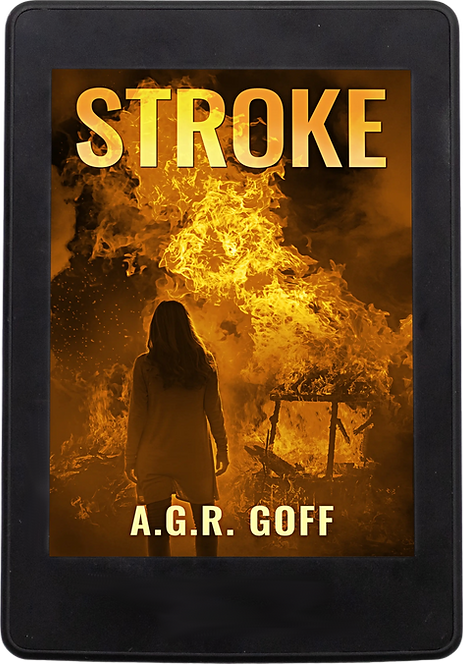
Stroke puts Ema Efra at the centre of the questions that have followed her through the Mind Games series. In Layers, Circle and Mirror, readers see the effects of her childhood, manipulation, violence and loss. In Stroke, Ema discovers information about her own past that makes her question whether she has always understood her actions, and the people around her, correctly.
As she learns more about her family and the secrets that have been kept from her, Ema also has to examine her own behaviour. She has experienced violence and control, but she may have used both herself. That creates difficult questions for readers about how much responsibility she carries for her actions and how far her childhood and later experiences can explain the choices she makes.
The discoveries in Stroke also change the meaning of events from Layers, Circle and Mirror. Readers who've followed Ema from the beginning already know what happened to her, but they now have information she didn't have at the time. That makes Ema particularly interesting to discuss: whether you still trust her version of events, whether your opinion of her changes as the book progresses, and how much learning about someone's past should affect the way you judge what they've done.
Discussion questions
-
How does Stroke change the reader’s understanding of Ema compared to the earlier novels in the series?
-
In what ways does the novel blur the line between victimhood and responsibility?
-
How does Ema’s past influence the decisions she makes throughout the novel?
-
Which moments suggest that Ema may not fully understand herself or her own motivations?
-
How does the story explore the psychological effect of living with unresolved trauma over many years?
-
In what ways do secrecy and partial truths shape the relationships between the characters?
-
How does the novel portray emotional dependency and the difficulty of separating love from control?
-
Which characters appear trustworthy at first, and how does that perception change as the story develops?
-
How does uncertainty influence the reader’s interpretation of Ema’s behaviour and memories?
-
In what ways does the novel examine the pressure of acting without fully understanding the truth?
-
How does Stroke explore the idea that trauma can distort memory, judgement, or self-perception?
-
Which moments suggest that Ema is searching not only for answers about the past, but also for an explanation of herself?
-
How does the novel portray the long-term psychological impact of manipulation and fear?
-
In what ways do guilt and self-justification shape the actions of different characters?
-
How does the story examine whether people can genuinely change, or whether they repeat destructive patterns?
-
Which revelations most strongly alter the reader’s understanding of earlier events in the Mind Games series?
-
How does the novel explore the tension between emotional survival and moral responsibility?
-
How does the title Stroke reflect themes of rupture, irreversible change, psychological breakdown, or transformation?
Themes
-
Trauma and long-term psychological damage
-
Identity, self-perception, and moral ambiguity
-
Manipulation and emotional dependency
-
Trust, betrayal, and concealed motives
-
Violence and psychological aftermath
-
Memory, perception, and uncertainty
-
Guilt and self-justification
-
Family secrets and hidden histories
-
Fear, control, and psychological pressure
-
Victimhood versus responsibility
-
Obsession and destructive attachment
-
The difficulty of escaping the past
-
Survival instinct and moral compromise
-
Psychological transformation and rupture
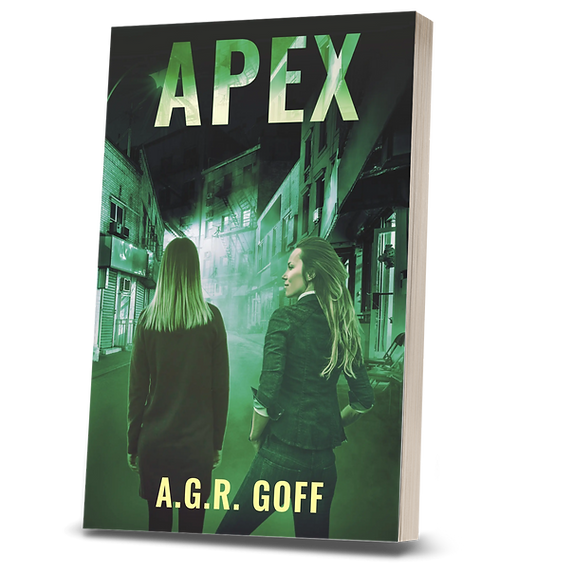
Apex brings the Mind Games series to its conclusion, pulling together questions that have followed Ema Efra through all five books. Her family history, her connection to South Africa, the cult and much of the violence surrounding her begin to fit together, changing what she thought she knew about her past and about her own part in it.
By this point, Ema has spent years dealing with people who have lied to her, manipulated her and tried to control her. In Apex, she has to face a more uncomfortable question: how much has that changed her? Some of the behaviour she once feared in other people has started to appear in her own decisions, particularly when loyalty, survival and the people closest to her are involved. It leaves plenty to argue about, including how far Ema is responsible for the choices she makes and how much can still be traced back to what was done to her.
The cult in South Africa also moves much closer to the centre of the story. Its connection to Ema's origins becomes clearer, along with the people who have protected it and the methods used to keep control. Bekka Wilford's story develops alongside Ema's as her behaviour becomes increasingly unstable and her need for control grows stronger.
For readers who have followed the series from Layers onwards, Apex also gives new meaning to events and relationships from the earlier books. By the end, there is a much fuller picture of Ema, her family and the people who have shaped her life, while still leaving room for readers to disagree about Ema herself and some of the choices she makes.
Discussion questions
-
How does Apex change the reader’s understanding of Ema compared to the earlier novels in the series?
-
In what ways does the novel suggest that survival can become tied to manipulation, control, or emotional dependency?
-
How do the events surrounding the South African cult reshape the reader’s interpretation of Ema’s past?
-
Which moments suggest that Ema is beginning to fear what she herself may be capable of?
-
How does the novel explore the long-term psychological effects of fear, coercion, and ideological control?
-
In what ways do secrecy and withheld information influence the relationships between the characters?
-
How does Apex portray the tension between emotional attachment and psychological domination?
-
Which characters appear to be acting out of loyalty, and which seem motivated primarily by self-preservation?
-
How does uncertainty surrounding the truth affect both the reader’s perspective and the characters’ decisions?
-
In what ways does the novel explore the difficulty of making moral choices while operating under psychological pressure?
-
How does Bekka Wilford’s deterioration parallel or contrast with Ema’s psychological state?
-
Which moments suggest that Ema is searching not only for answers about her past, but also for proof that she is different from the people who shaped her?
-
How does the novel portray the lingering influence of manipulation even after direct control begins to weaken?
-
In what ways do guilt, fear, and self-justification shape the actions of different characters?
-
How does Apex explore whether trauma creates cycles that people unconsciously repeat?
-
Which revelations most strongly alter the reader’s understanding of earlier events in Layers, Circle, Mirror, and Stroke?
-
How does the novel examine the relationship between psychological survival and moral compromise?
-
In what ways does the story suggest that identity itself can become unstable under prolonged emotional pressure?
-
How does the collapse or weakening of institutional structures affect the behaviour of individual characters?
-
How does the title Apex reflect culmination, escalation, confrontation, or the psychological breaking point reached within the novel?
Themes
-
Psychological control and ideological manipulation
-
Trauma and long-term emotional destabilisation
-
Identity, self-perception, and inherited darkness
-
Emotional dependency and coercive relationships
-
Trust, betrayal, and concealed loyalties
-
Fear, survival, and moral compromise
-
Cult influence and systems of power
-
Violence and psychological aftermath
-
Memory, perception, and uncertainty
-
Guilt, denial, and self-justification
-
Family history and hidden origins
-
Obsession, possession, and destructive attachment
-
Psychological deterioration and instability
-
The repetition of destructive behavioural patterns
-
Isolation and emotional vulnerability
-
Secrecy, revelation, and shifting truth
-
The collapse of personal and institutional control
-
Psychological culmination and transformation