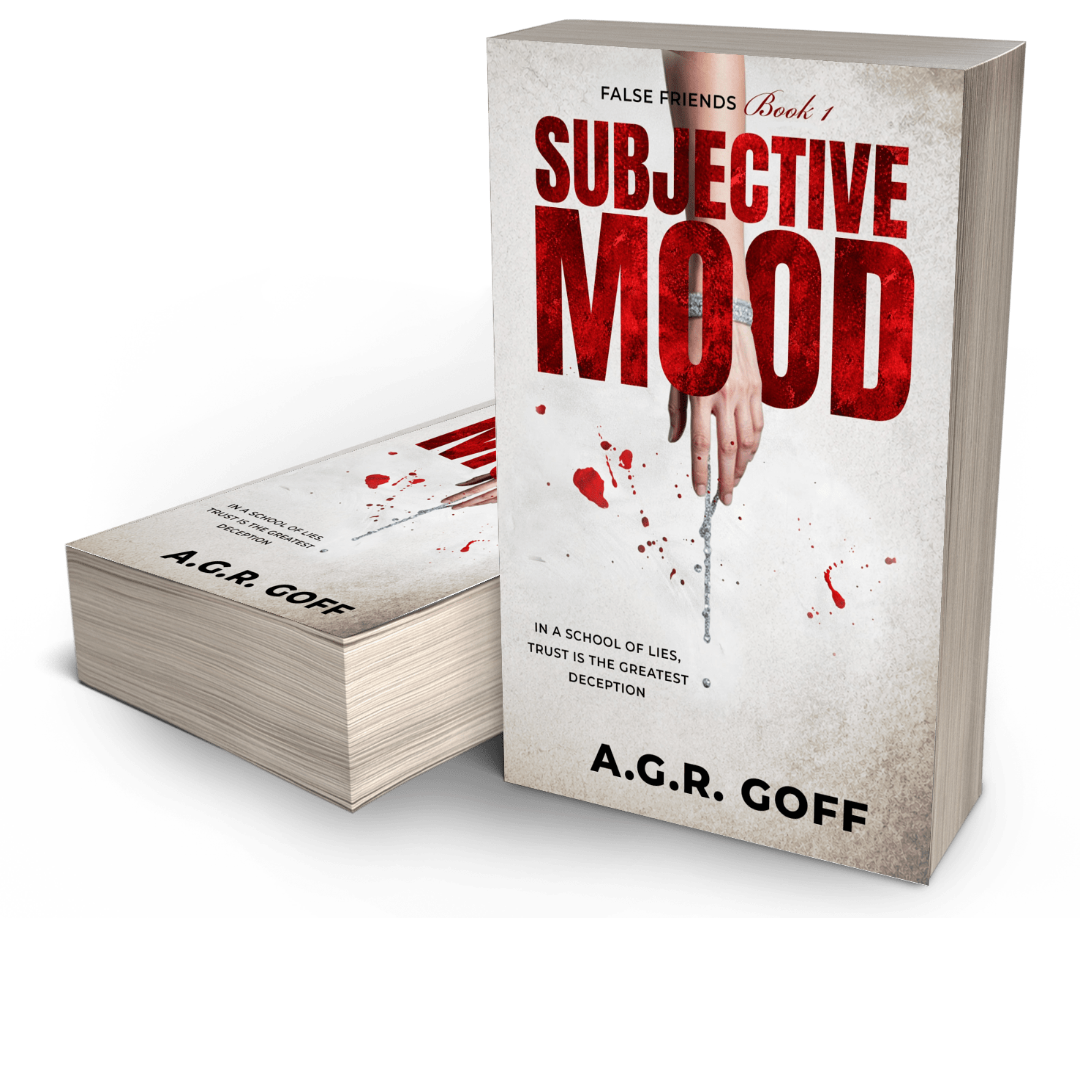
Manche Lektionen verändern mehr als nur die Art, wie wir sprechen.
In der südafrikanischen Küstenstadt George begegnet Bianca dem charismatischen Sprachlehrer Ramón, dessen Faszination für Worte weit über die Grammatik hinausgeht. Als er sie einlädt, seine Sprachschule, das Instituto Guerrera im spanischen Málaga, zu besuchen, sieht Bianca darin die Chance auf einen Neuanfang.
Doch hinter der angesehenen Sprachschule verbirgt sich weit mehr, als es zunächst den Anschein hat. Unter der makellosen Fassade erstreckt sich ein verborgenes Geflecht aus Kontrolle, Schweigen und Besessenheit. Hier beeinflusst Sprache weit mehr als nur das Denken, und selbst die Bedeutung von Worten kann zur Waffe werden.
Während Bianca zunehmend das Gefühl für ihre eigene Identität verliert, muss sie sich einer verstörenden Frage stellen: Lernt sie tatsächlich eine neue Sprache, oder wird ihre Persönlichkeit durch sie Stück für Stück umgeformt?
Subjective Mood ist der erste Band der Psychothriller-Reihe False Friends – eine Geschichte über Macht, Verlangen und die gefährlichen Möglichkeiten, mit denen Kommunikation zur Täuschung eingesetzt werden kann.
Inspiriert von realen Menschen und einer tatsächlich existierenden Sprachschule, lässt der Roman die Grenzen zwischen Wahrheit und Fiktion verschwimmen und zeigt, dass Worte ebenso viel enthüllen wie zerstören können.

Bewertungen
I liked this book a lot. Having the story take place in Málaga and mostly around a language school was something I hadn’t come across before, and I enjoyed getting to know Bianca and the people she meets there.
Things get stranger as the book goes on, and I kept changing my mind about some of the characters and whether Bianca could trust them. There were a couple of places where I thought the story dragged a little, so for me it wasn’t quite five stars. But I wanted to know what was happening a
I expected a mystery, but what I enjoyed most was how much attention was given to the relationships between the characters. Bianca, Ramón and the people around them, all feel as though they have their own motivations instead of simply moving the plot along. The psychological elements grow naturally out of those relationships, making the story feel believable. By the end, I was far more invested in the characters than I expected, which is exactly what made the book work so well for me.
I received an ARC of Subjective Mood and really enjoyed it. I only found out afterwards that an earlier version was published as Subjunctive Mood, which now makes me curious about what changed besides the title. Bianca's move from South Africa to Málaga was probably my favourite part, especially once Ramón starts becoming more involved in her life. There were times when I wanted to tell her to stop trusting him, then a few pages later I wasn't so sure myself. I'll be reading book two.
I bought the paperback without knowing much about the story and was surprised by how different it feels from most psychological thrillers. The writing is very controlled and doesn’t try to over-explain things, which makes the reading experience more engaging. You start noticing small details and begin to question what they might mean. It’s not a loud or dramatic book, but it creates tension in a quieter way. A solid read if you’re looking for something a bit different.
I enjoyed this book. A language school in Málaga is something different, and the mix of students and teachers gives the story its own feel. Bianca’s story kept me curious, especially once it became clear that there was more going on at the school than she realised. Some parts moved a little slowly for me, and I would have liked the mystery to develop faster in places. But I liked the characters and the Spanish setting enough to keep reading, and I’d be interested to see where it goes.